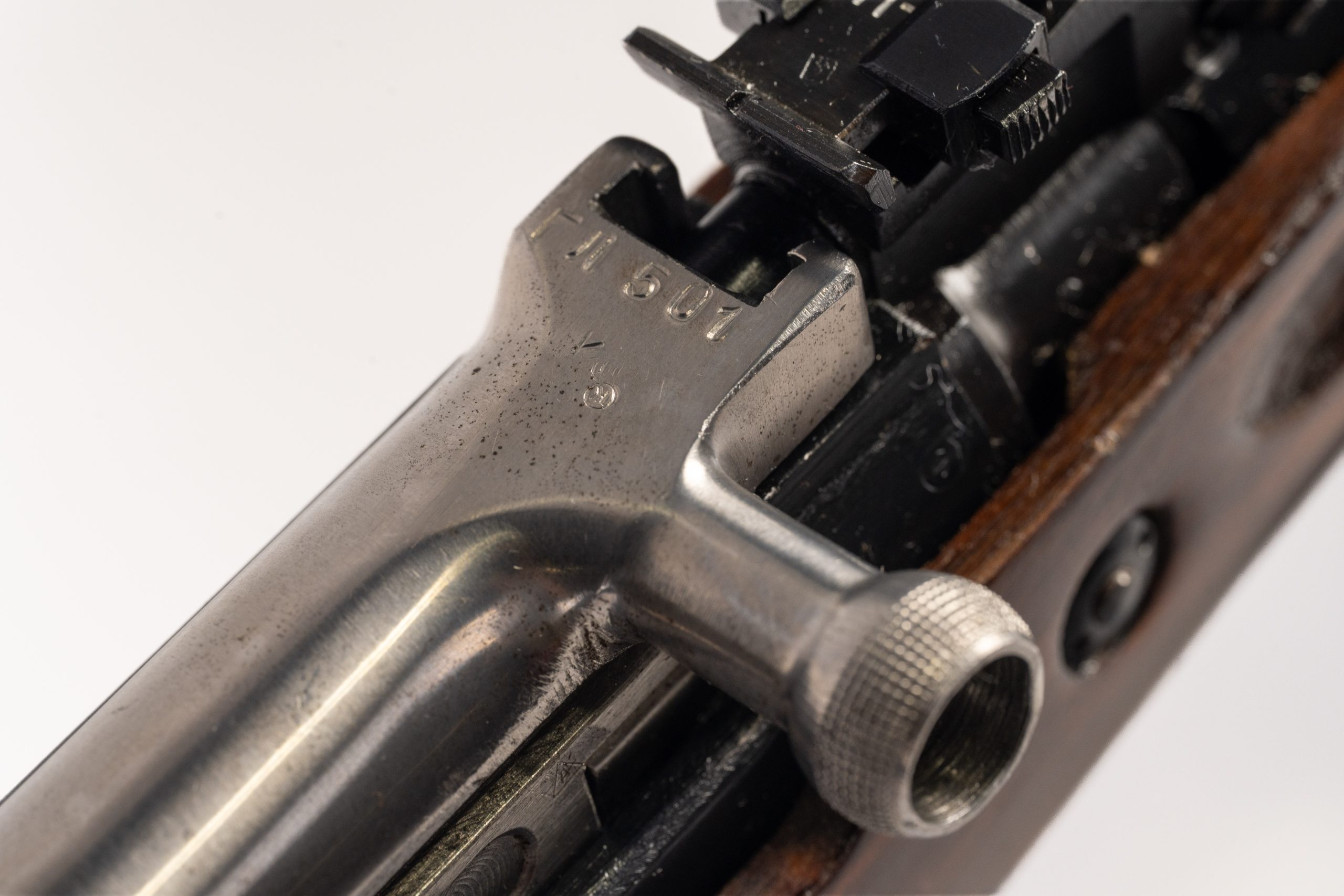
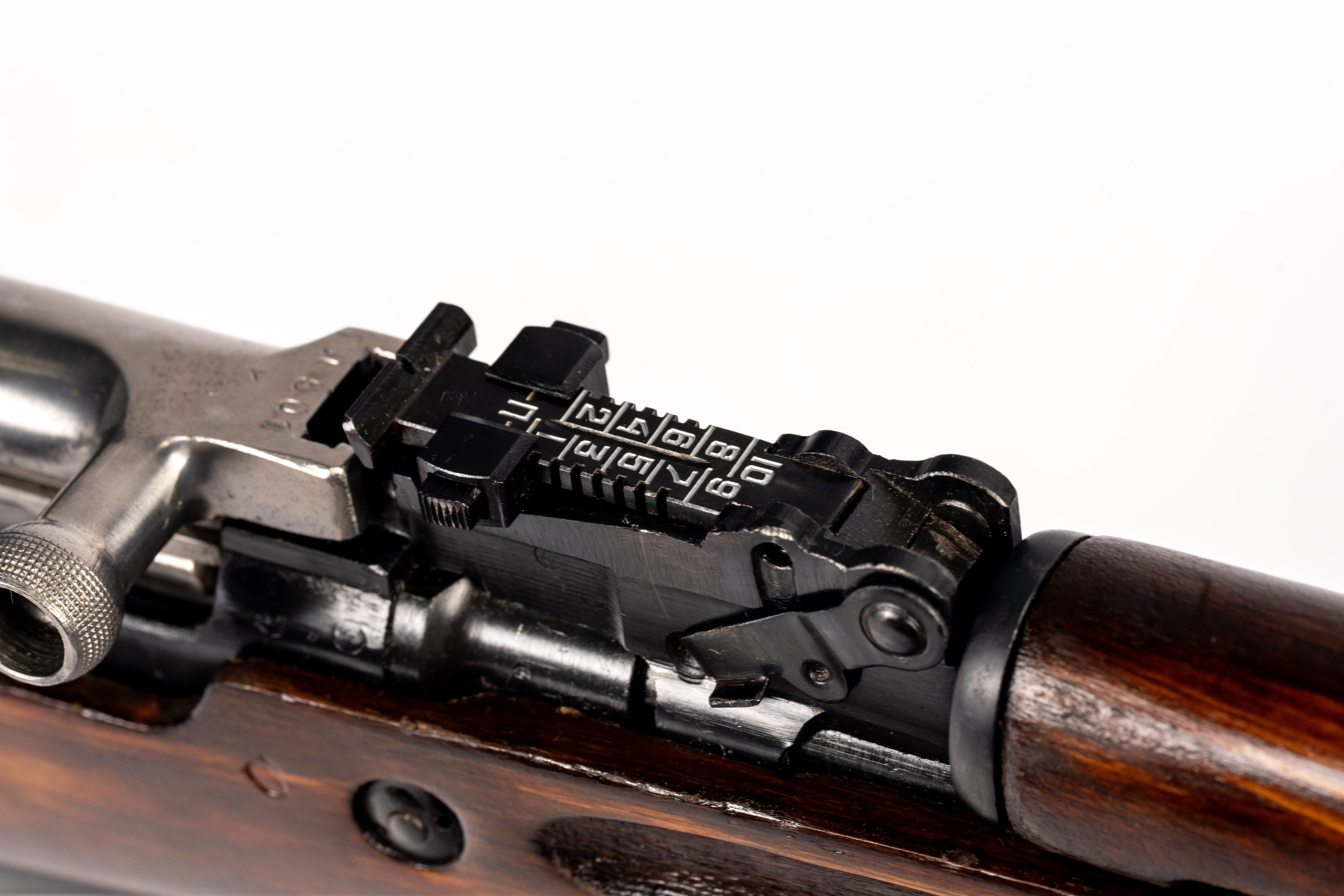
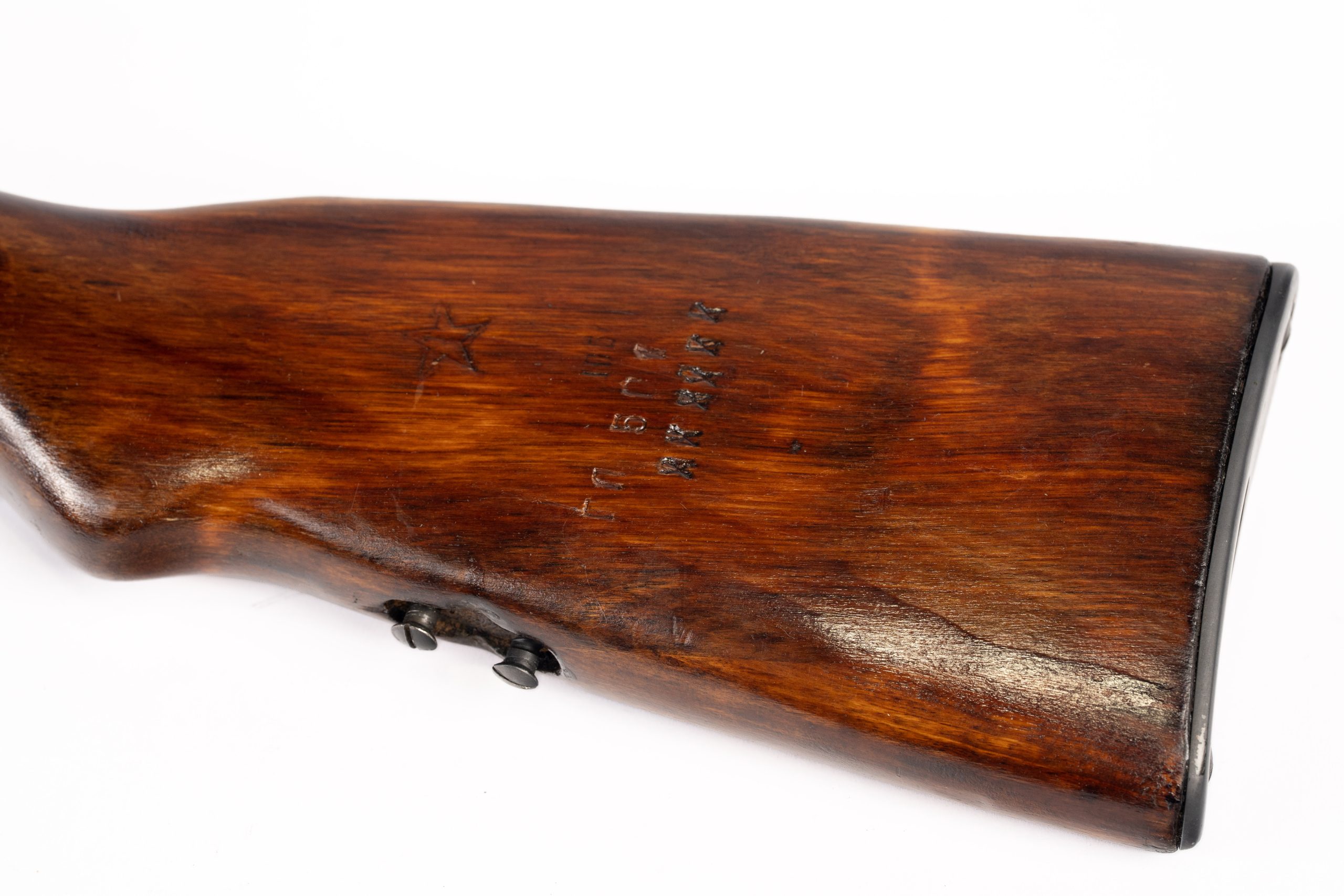
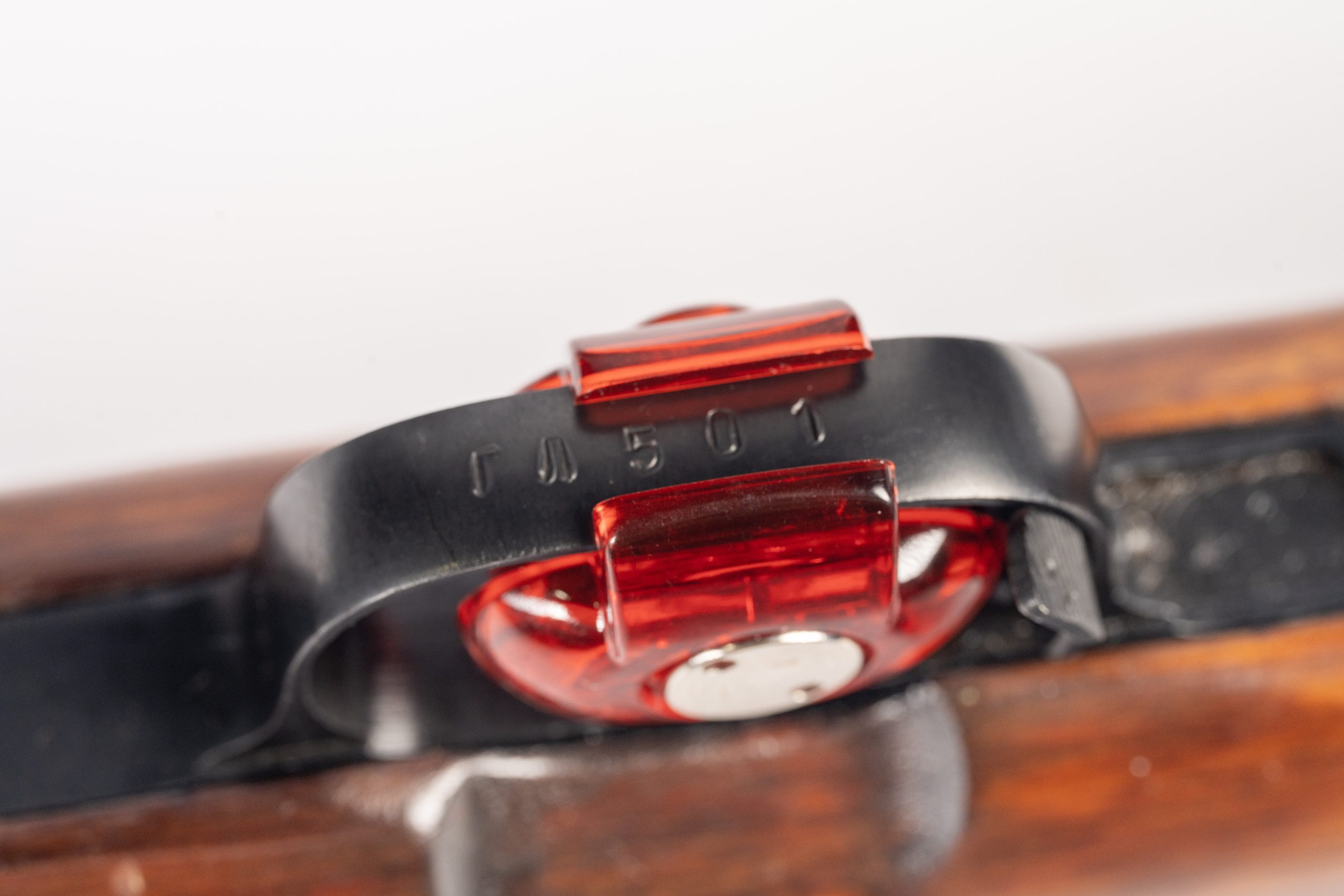
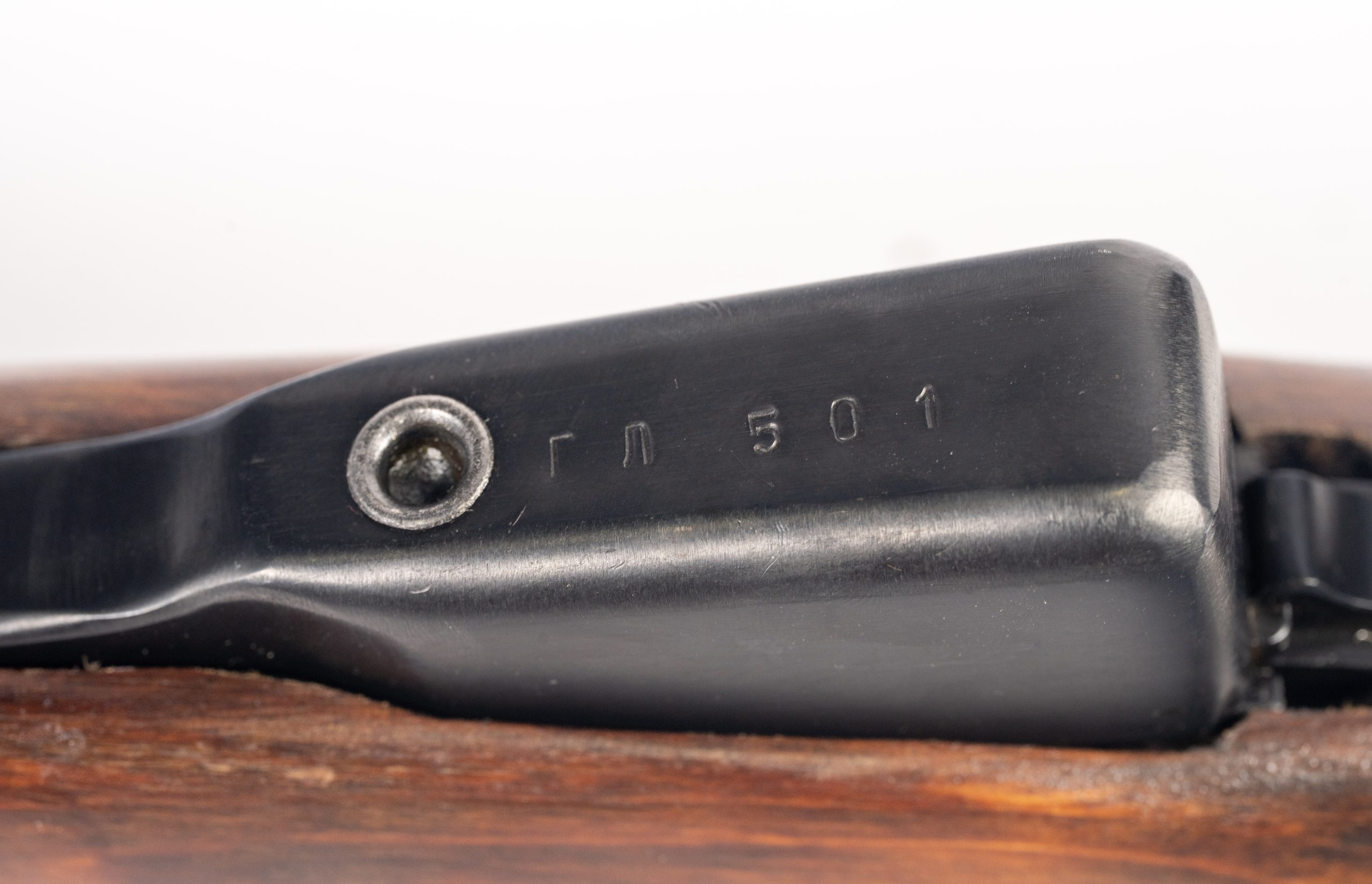
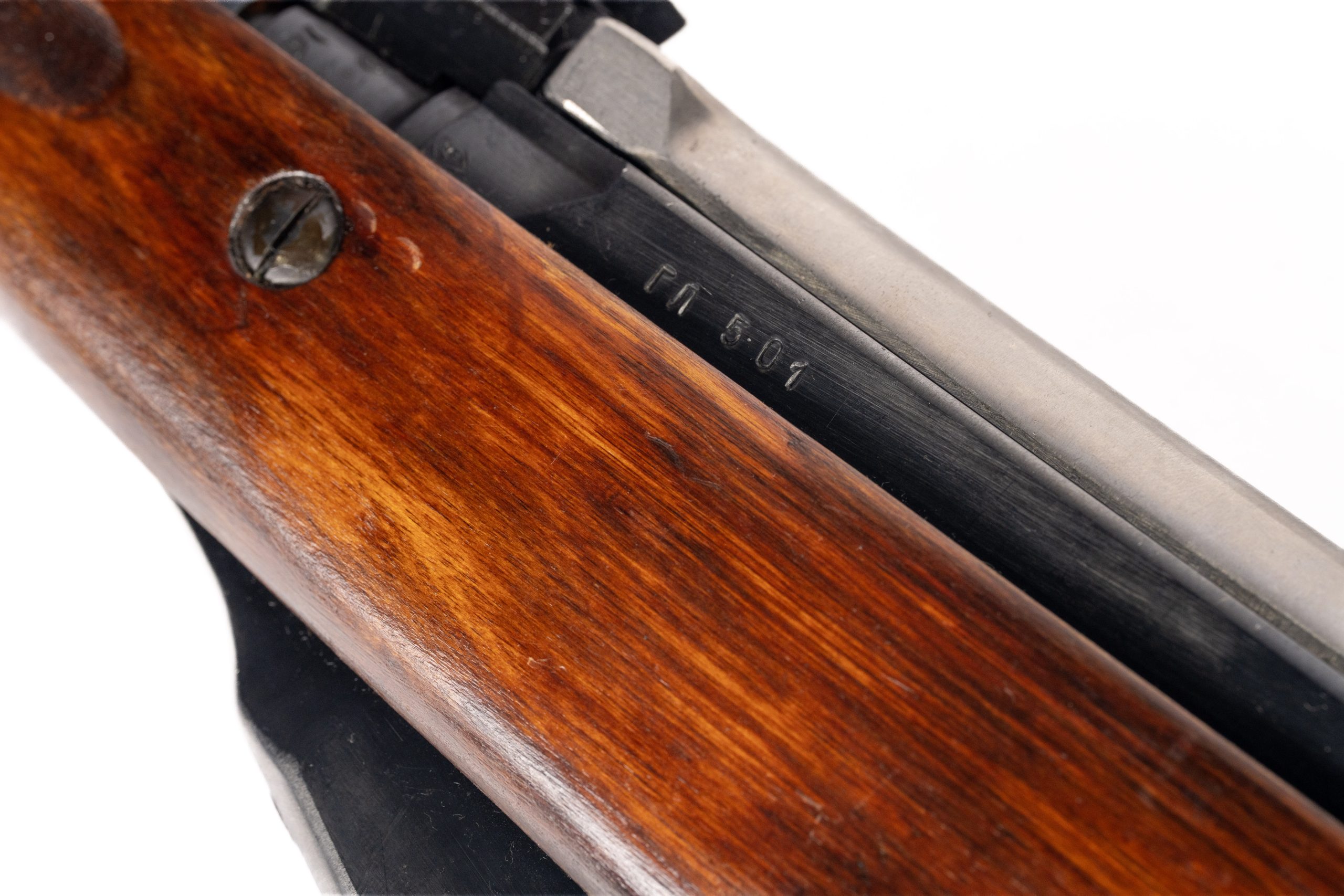
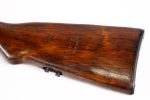

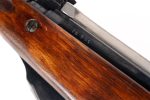
The stock is force-matched — the numbers were deliberately altered to match the receiver. This is a known practice in Soviet refurbishment and among collectors seeking to assemble all-matching examples. It doesn’t affect the rifle’s function or historical value, but it does mean the stock’s original numbers are obscured. Collectors appreciate this transparency; a force-matched stock honestly acknowledged is more valued than a rifle where the stock’s history is unclear.
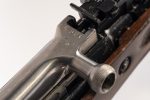
The dust cover is non-matching — a minor detail that reflects this rifle’s service life and the reality of how Soviet weapons were maintained and refurbished over decades. Parts were swapped, replaced, and repaired as needed; a non-matching dust cover is one of the most common variations you’ll encounter on field-used Mosins and SKS rifles.
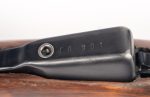
Missing rear sling swivel. This is a small but noticeable absence. The rear swivel is a functional attachment point for field carry, and its loss reflects actual use rather than careful preservation. This is an honest detail that speaks to the rifle’s history.
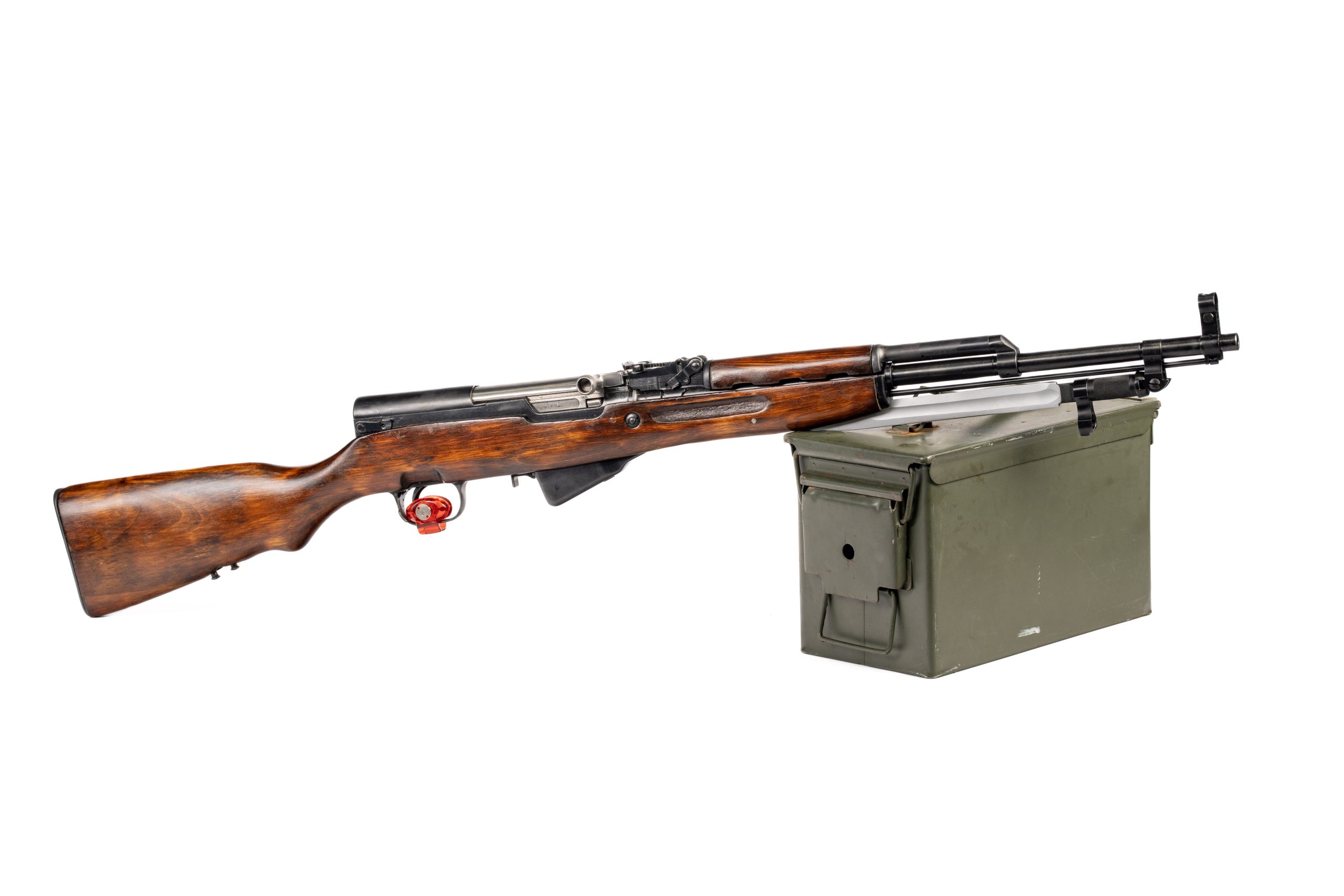
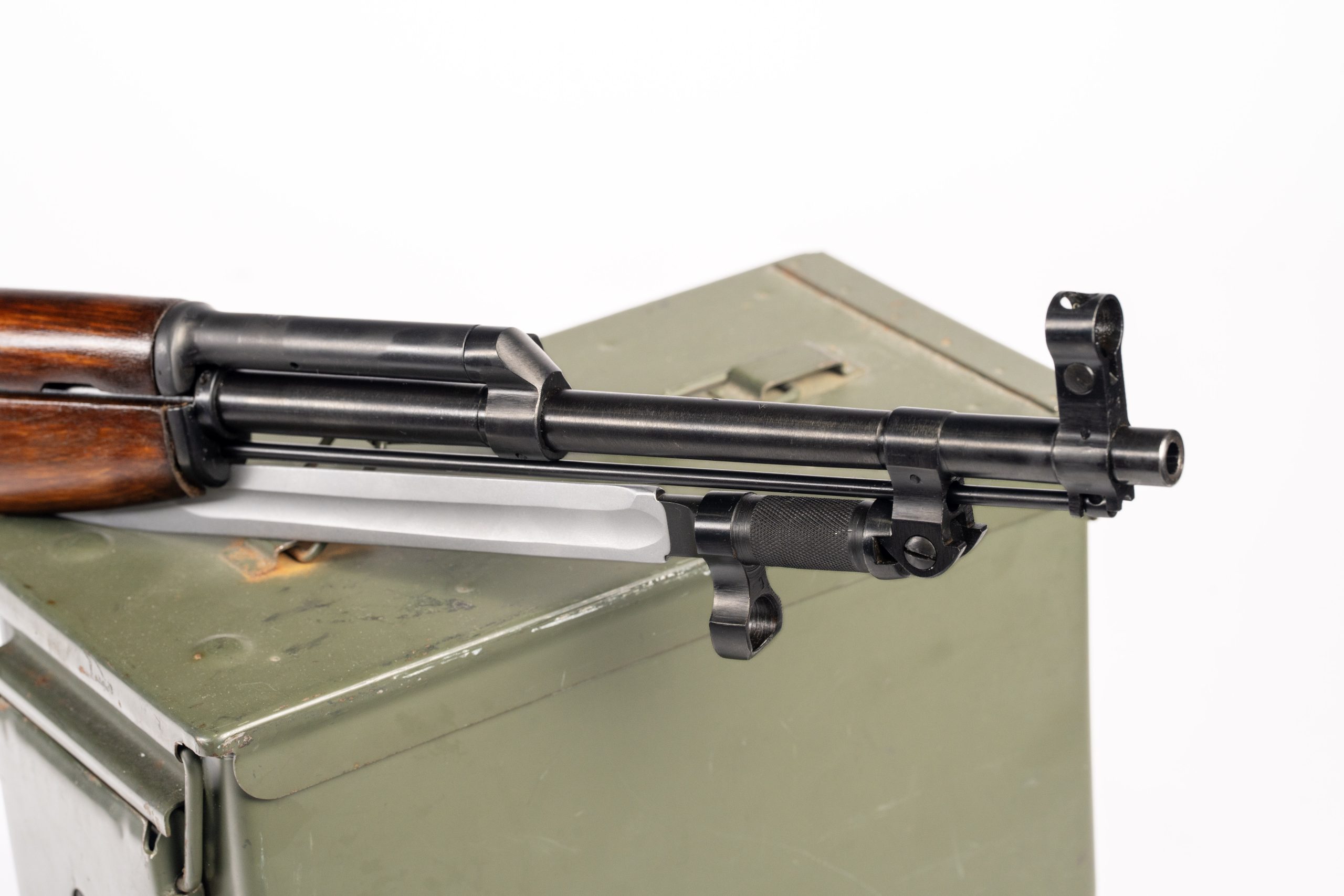
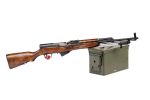
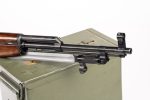
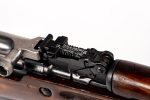
Very good to excellent condition throughout. Despite the stock force-match and missing swivel, this rifle presents beautifully. The metal retains strong finish with appropriate patina consistent with age and storage. The wood is clean and straight. The gas system operates smoothly, the bolt carrier cycles with authority, and the semi-automatic function engages reliably. After 72 years, this rifle demonstrates why the SKS design endured.
1954 Tula production — peak year. The year 1954 places this rifle in the post-war consolidation period, when the Red Army was equipping its expanding forces. Production at Tula during these years represents some of the finest Soviet small arms manufacturing — quality control remained high, materials were standardized, and the design had been refined through combat experience. A 1954 Tula SKS is as good as these rifles get in terms of manufacturing oversight.
Why collectors appreciate honest rifles. Not every SKS needs to be a pristine, all-matching museum piece. Serious collectors recognize that a rifle with a force-matched stock and missing minor components tells a real story — this is a weapon that served, was maintained, and has survived to the present day with integrity. The transparency about its condition is more valuable than hidden or concealed issues.
Historical significance. The SKS occupies a unique place in Cold War and firearms history. A 1954 Tula example is a product of peak Soviet manufacturing standards, issued to troops during the height of Cold War military expansion. This rifle’s very good to excellent condition, combined with its mostly all-matching configuration, makes it an excellent representative example of Soviet arms quality.
Technical specifications:
Model: SKS Carbine
Caliber: 7.62x39mm
Manufacture: Tula Arsenal, 1954
Condition: Very good to excellent, original throughout
All components matching: Bolt, receiver, magazine, trigger group, action cover
Stock: Force-matched (numbers altered to match receiver)
Dust cover: Non-matching
Note: Missing rear sling swivel
Action: Semi-automatic, gas-operated
What this rifle is. This is a solid, functional 1954 Tula SKS that doesn’t pretend to be something it’s not. It’s not a pristine, museum-grade all-matching example — but it’s also not a parts gun or heavily refurbished piece. It’s an honest rifle in very good to excellent condition, with a straightforward history reflected in its configuration. For collectors who value function, authenticity, and historical character over perfect condition metrics, this is an excellent acquisition.
If you’ve been searching for a solid, well-functioning 1954 Tula SKS with strong condition and honest provenance — a rifle that serves equally well on the range or in a collection — this is it.